
Belize’s Reef Has New Champions—and They’re Everyday People
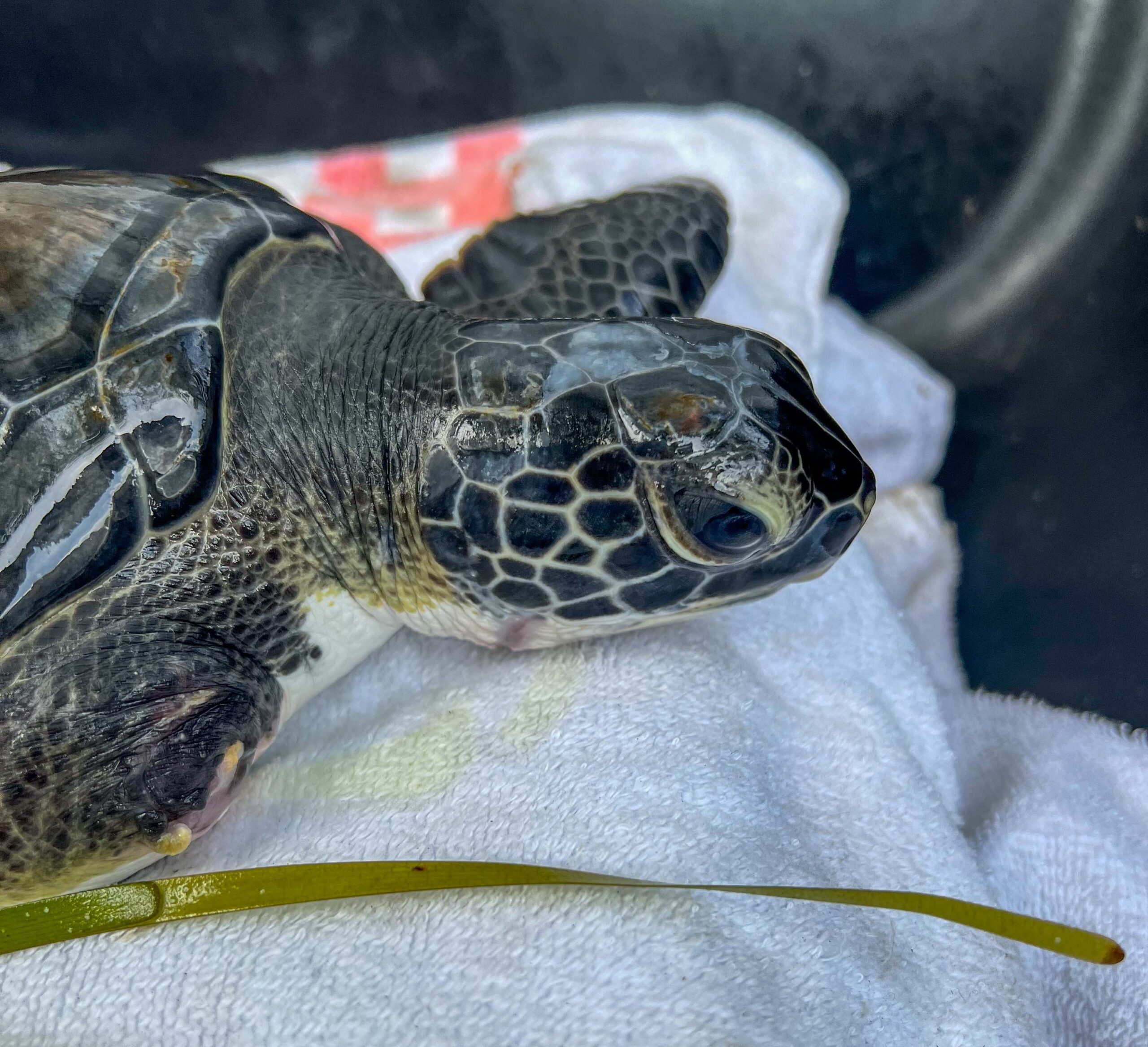
In 2024, a juvenile green turtle arrived at the ECOMAR rehabilitation facility in a state that most would call hopeless. Weighing just 2.5 pounds, the tiny creature, later named “Bubbles,” had been attacked, leaving her with only two flippers, the left front and the right rear. “Normally turtles with only two flippers are euthanized,” recalls Linda Searle, Executive Director of ECOMAR. But an expert veterinarian asked a different question: Can she swim?
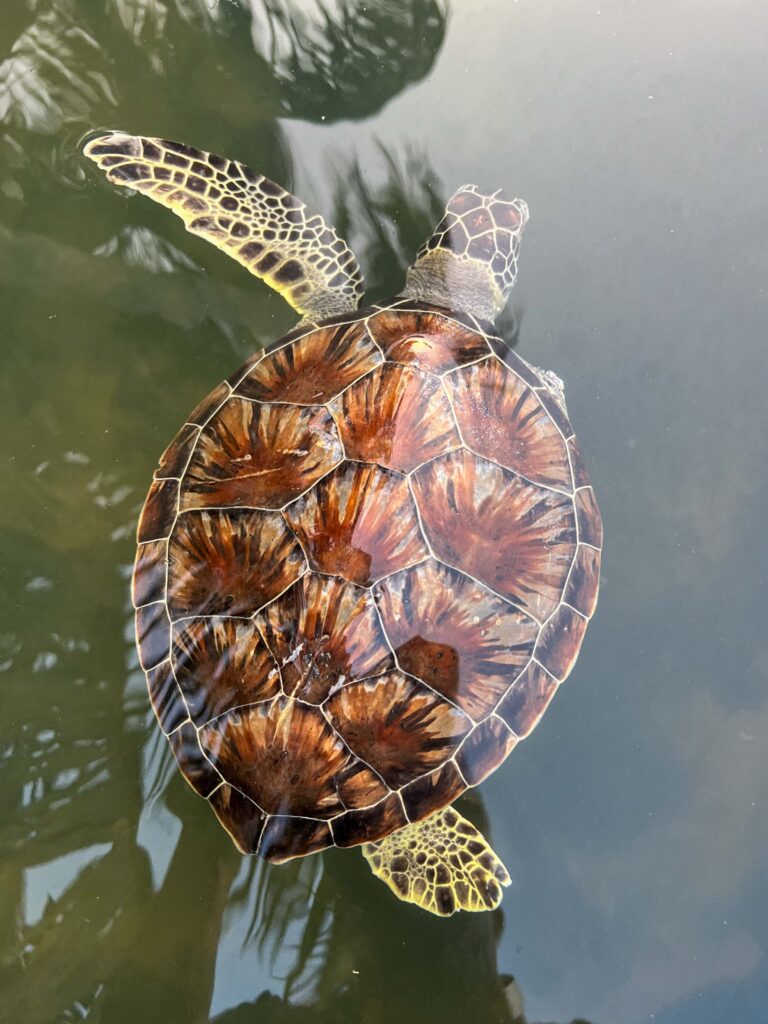
Bubbles could. After daily wound care using antiseptic and honey, she healed, gained strength, doubled her weight, and was released back onto the Belize Barrier Reef at Gallows Point. Linda still lights up telling the ending: “It was really impossible to keep up with her as she swam over the reef and a nurse shark too!”
That same spirit—don’t give up, learn what’s possible, act quickly—drives ECOMAR’s work today.
A grant that keeps the reef on the radar
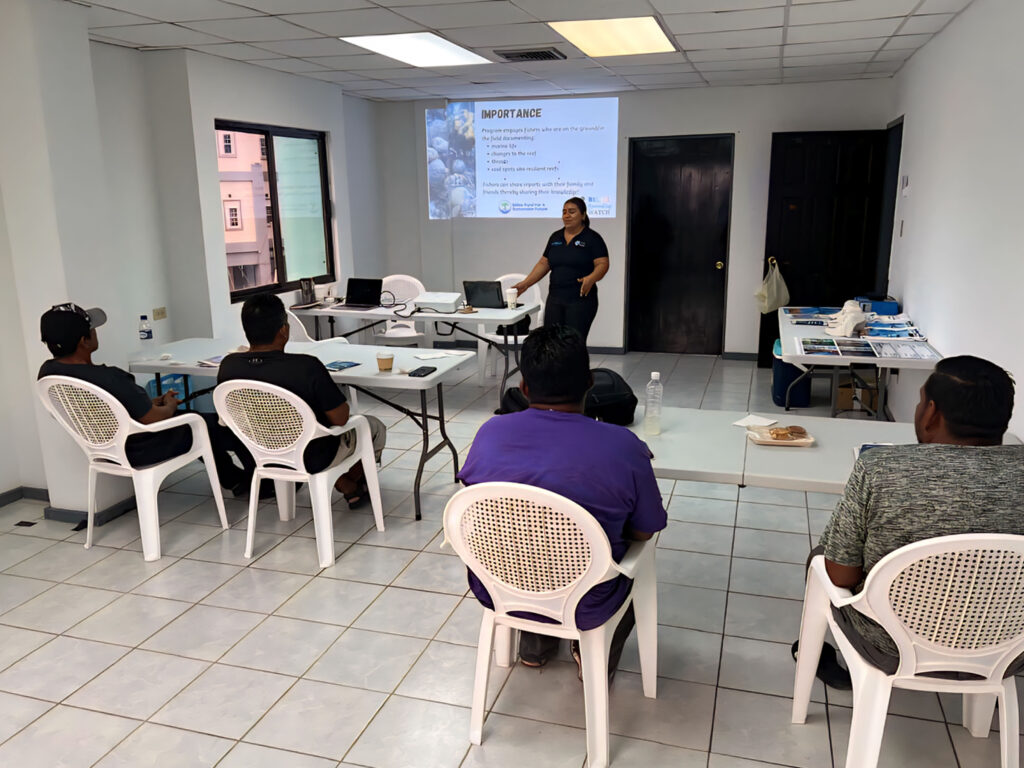
With BZ$139,225.00 in support from the Belize Fund for its 12-month project, Using Citizen Science to Identify Resilient Reefs, Hope Spots, and Biodiversity in the Belize Barrier Reef, ECOMAR is expanding a model where everyday Belizeans help monitor the health of the sea. Fishers, guides, and coastal community members are becoming trained observers, contributing real-time data that strengthens conservation and marine management.
Over the years, ECOMAR has grown its marine research and citizen science engagement, including the establishment of the St. George’s Caye Field Station, and sea turtle rehabilitation facilities in partnership with the Belize Fisheries Department. Its participation in national monitoring networks helps identify research gaps while creating clear pathways for Belizeans to contribute to meaningful, real-time monitoring.
When fishers become frontline observers
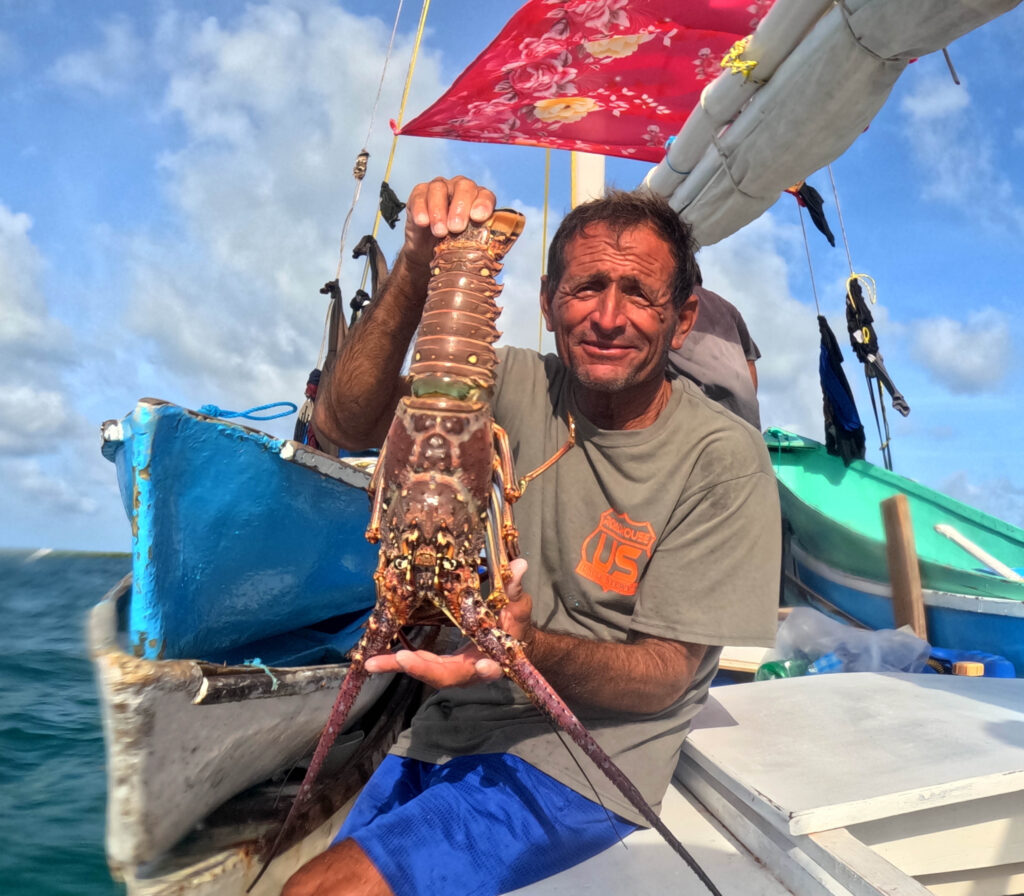
A healthy reef is an economic lifeline. Belize’s tourism and fishing industries depend on it. That’s why some of the most powerful citizen scientists are often the people who know the sea best: fishers and marine guides.
With Belize Fund support, ECOMAR expanded two flagship efforts under Belize Barrier Reef Watch: the Reef Champion Competition and the Action Camera program. In just six months, Reef Champions generated over 1,200 reports, while the Action Camera program engaged more than 20 fishers monitoring reefs and submitting observations. These reports help identify “hope spots,” areas of the reef showing resilience in the face of climate change, disease, and other pressures.
One of the most surprising sightings involved false killer whales in the shallow coastal lagoons off Belize City. While alarming at first, repeated sightings helped experts determine the animals were likely following food and exiting safely, turning concern into understanding.
Stewardship that feels personal
For Bianca Chan, Outreach Coordinator Watch at ECOMAR, the impact goes beyond data. The goal, she says, is not just protecting what exists today, but “to build a basis to protect it tomorrow,” by promoting education, learning, and “positive attitudes” toward conservation.
Her most memorable moments come from engagement in the field. Seeing fishers and other participants lean in, ask questions, and get excited about new tools. “It’s very rewarding to see people enthusiastic about learning new ways to conserve,” she says, especially when those same marine resources represent “their entire livelihoods and income.” Stewardship becomes personal when people realize their observations matter.
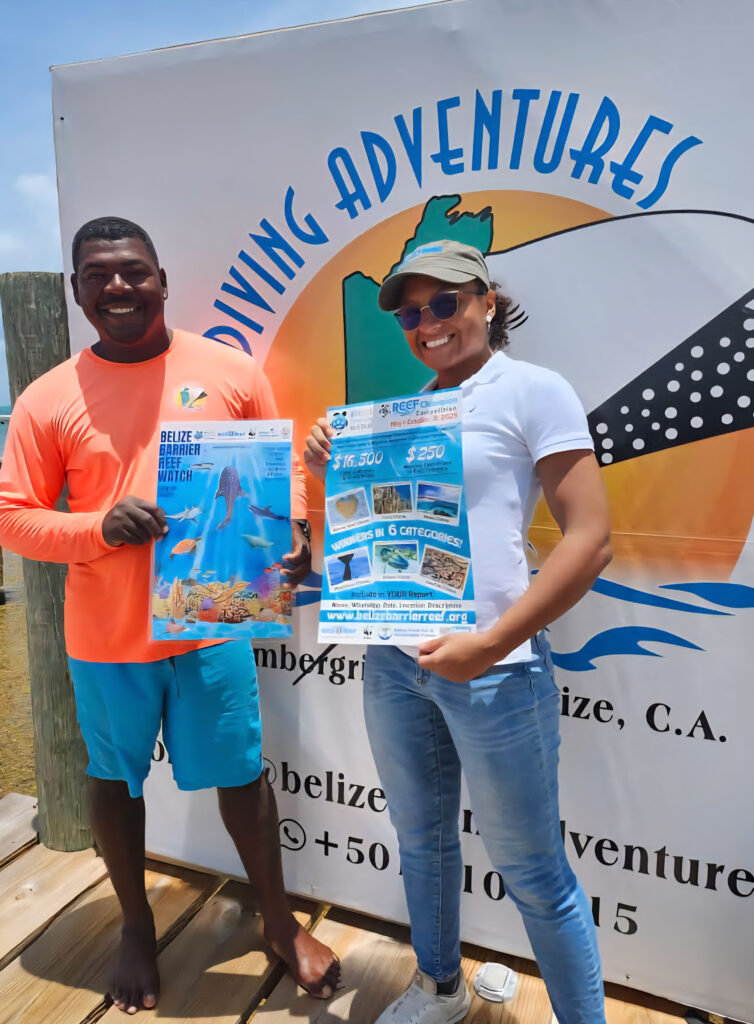
ECOMAR has designed multiple ways to get involved, from “Adopting a Reef” to supporting eco-certified businesses. This allows people to participate based on what they care about—corals, turtles, lionfish, or general reef health. That range matters because stewardship grows faster when it feels personal.
Why sustainable financing is important for Belize and for the world
Sustaining this work, however, requires more than passion. “Sustainable financing is critical,” Linda explains. “Many conservation efforts start with grant funding, but it’s really important to identify ways in which activities can be financed over the long term. And it’s challenging.”
It takes real effort to make sure the stewardship, skills, and community engagement continue long after a project ends.
What happens on Belize’s reef matters far beyond our shores. When Belizeans document resilient corals, track biodiversity, megafauna migration, and report invasive species and other threats, they contribute to knowledge that strengthens marine conservation globally.
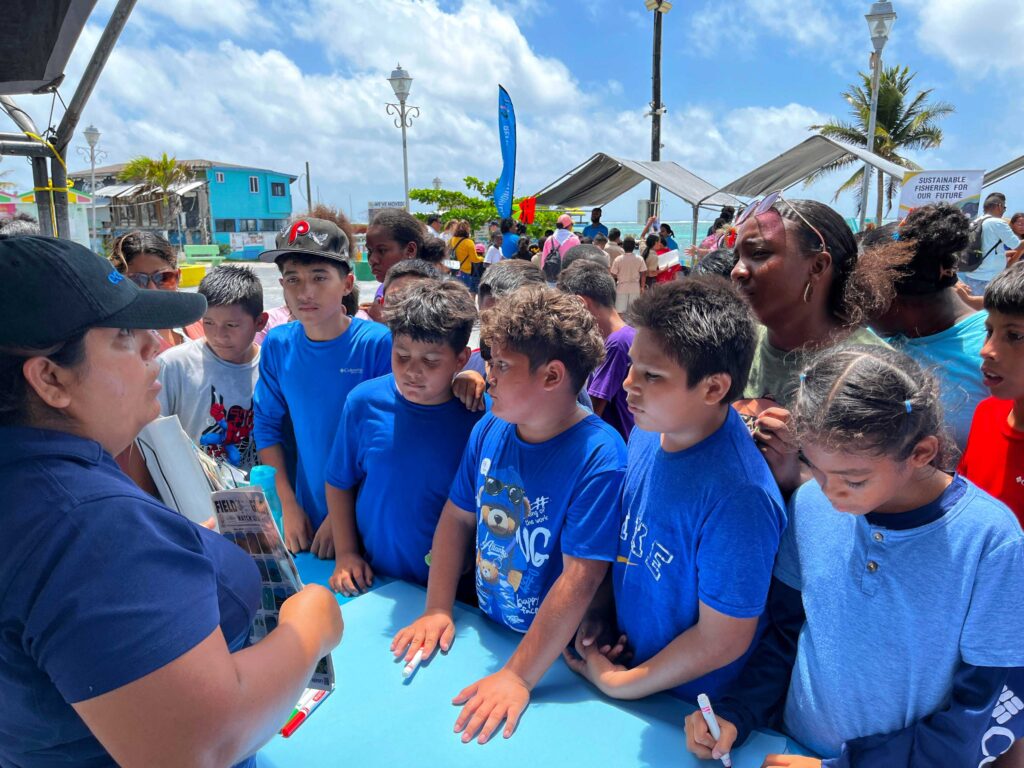
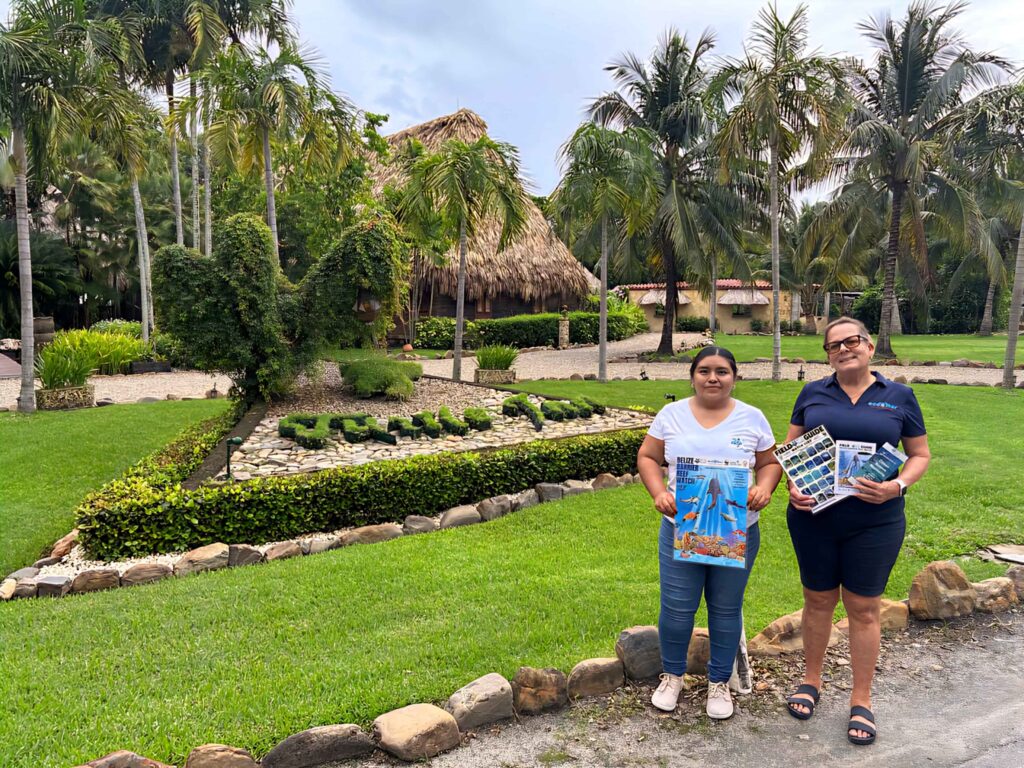
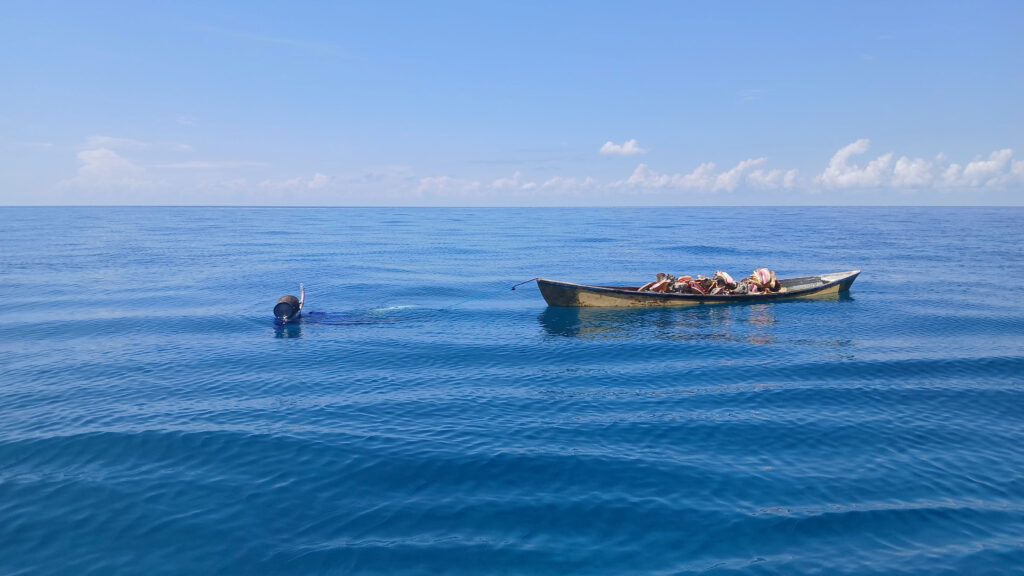
But the heart of this work is still local. It’s livelihoods. It’s pride. It’s the quiet decision to pay attention, and to act.
Like Bubbles, resilience doesn’t always look obvious at first. Sometimes it’s a fisher with a camera. Sometimes it’s a community paying closer attention. And sometimes, with the right financing behind it, this kind of stewardship doesn’t have to be temporary. It can become Belize’s new normal: one report, one trained observer, one hope spot at a time.