Marine Community

News & Events

UB and Belize Fund Partner for Ocean Conservation Research and Education

(City of Belmopan, November 26, 2025) – The University of Belize (UB) and the Belize Fund for a Sustainable Future today signed a Memorandum of Understanding (MOU) to formalize a strategic partnership that will enhance national capacity in ocean conservation, climate adaptation, and blue economy development. The agreement aims to connect scientific knowledge with real-world action by supporting research, training, community empowerment, and public awareness initiatives that contribute to the sustainable management of Belize’s ocean space. Under this partnership, UB and the Belize Fund will collaborate to: “This partnership is an important step forward for UB and for Belize,” said UB President, Dr. Vincent Palacio. “It gives our students and faculty greater opportunities to engage in meaningful work that supports marine conservation and the development of a sustainable blue economy. We are always looking for ways to connect what we teach in the classroom and explore in our research labs with what the country actually needs, and this MOU helps us do exactly that.” “As Belize moves toward effective ocean conservation, a thriving blue economy and adaptation to climate change, collaboration is vital,” says Dr. Leandra Cho-Ricketts, Executive Director, Belize Fund. “This partnership with UB allows us to combine scientific research, community empowerment, and sustainable financing to deliver lasting impact for people and nature.” The MOU will remain in effect for five years and includes mechanisms for joint planning, monitoring, and evaluation of activities. Both organizations will designate key officers to oversee implementation and ensure the success of this partnership. – End –

News & Events

PRESS RELEASE: Belize Fund Awards $250,000 in Emergency Response Grants to BTIA and BHA to tackle Sargassum

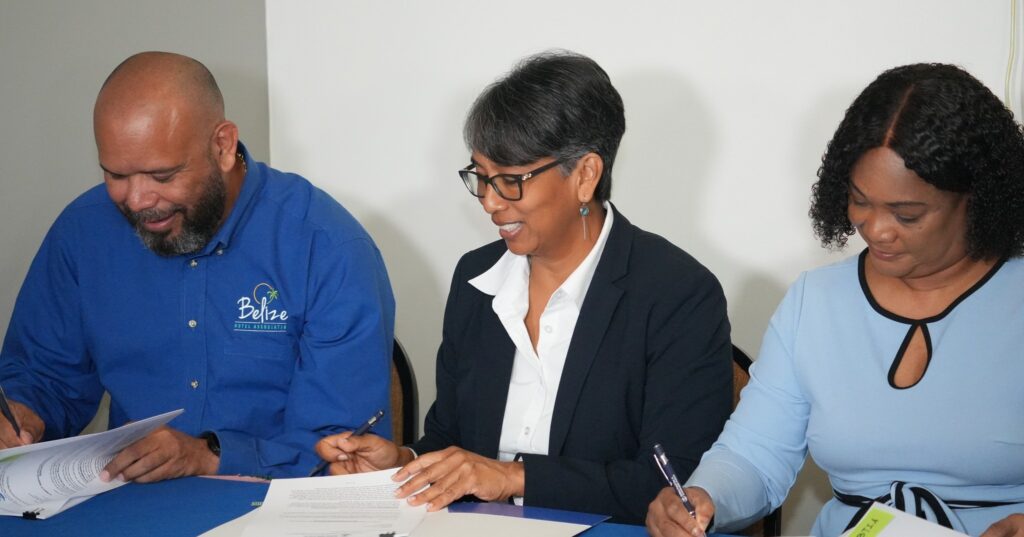
(City of Belmopan, August 28, 2025) – Today, the Belize Fund for a Sustainable Future awarded Emergency Response Grants totalling BZ$250,000 to the Belize Tourism Industry Association (BTIA) and the Belize Hotel Association (BHA), to help address the worsening sargassum emergency impacting people, ecosystems, and livelihoods. The emergency funding is equally distributed between the BTIA and BHA, with each organization receiving BZ$125,000 to support affected hotels in San Pedro, Caye Caulker, Hopkins, Seine Bight, Placencia, and other offshore islands. The Funds will be used to support sargassum removal through equipment rental, hiring of personnel, and safe disposal. This intervention will also help maintain cleaner beaches for both residents and visitors. “Beyond tourism impacts, decomposing sargassum creates serious respiratory health risks for coastal communities, kills marine life through oxygen depletion, contaminates our waters, and threatens the livelihoods of fishermen and other coastal workers,” expressed Dr. Leandra Cho-Ricketts, Executive Director of the Belize Fund. “While we cannot solve this emergency alone, we want to help reduce its immediate impacts on both our environment and our people.” The Signing Representatives were: • Dr. Leandra Cho-Ricketts (Belize Fund) • Ms. Linette Canto (BTIA) • Mr. Reynaldo Malik (BHA) The two-month intervention operates through a re-granting mechanism, allowing BTIA and BHA to distribute funds directly to the most severely affected hotels in coastal areas where they are needed most urgently.

Opportunities

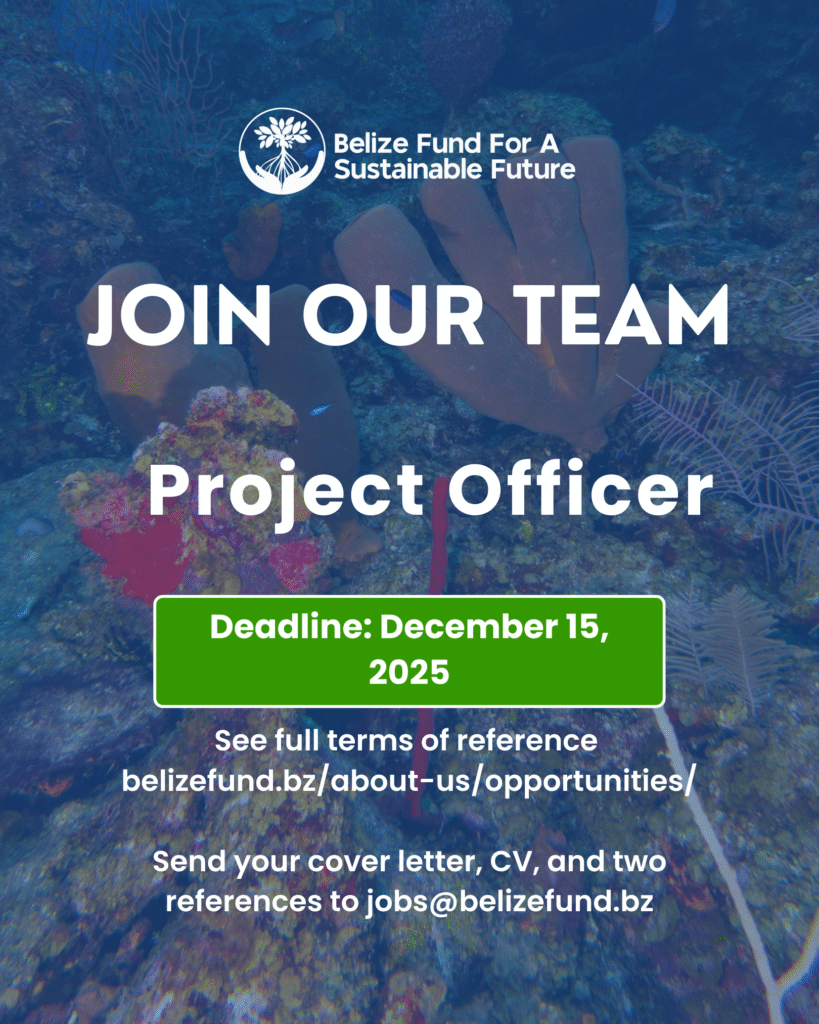
Vacancy for Project Officer

The Belize Fund for a Sustainable Future is seeking a highly skilled and motivated Project Officer to support the implementation of our Blue Bonds Program and strengthen the impact of our conservation and community-based initiatives. If you’re passionate about sustainable development, marine conservation, and supporting partners across Belize, this role is for you! 💼🌿🐬 Key Responsibilities: Minimum Requirements: ◾ Bachelor’s degree in management, business administration (project-focused), or a related area◾ At least 3 years of project management experience relevant to this role ◾ Strong communication, analytical, and organizational skills◾ Familiarity with biodiversity conservation issues◾ Proficiency in Microsoft Office Suite◾ Valid driver’s license (field travel required)  📅 Application Deadline: December 15th, 2025 📄 Submit a cover letter, resume, and two references to:jobs@belizefund.bz 🔗Download the full Terms of Reference: #ConservationJobs #BelizeFund #ProjectOfficer #BlueBonds #SustainableFuture #HiringNow #BelizeJobs #MarineConservation

News & Events

From Fishers to Conservationists: Safeguarding Sharks, Safeguarding Our Seas

Sharks may be feared for their teeth, but in Belize, they’re valued as guardians of the sea. At Glover’s Reef, local fishers are teaming up with scientists to tag sharks, track their movements, and collect vital data that informs how we protect marine life. What once was seen only as fishing is now evolving into conservation, where every dive, every tag, and every discovery helps keep our ocean in balance. Through the Belize Shark Fishers Association, second-generation fisherfolk are blending traditional knowledge with modern science, creating new livelihoods while contributing to global shark research. Their work proves that conservation is not only about protecting species—it’s also about protecting communities and building a sustainable blue economy. Backed by sustainable financing through the Belize Fund for a Sustainable Future, local partners like the Shark Fishers Association are proving that conservation can create jobs, protect species, and strengthen coastal livelihoods. This feature is part of the “Financing for Belize’s Ocean Space” series—real stories of how conservation funding supports Belize’s blue economy, its people, and its future. #BelizeFund #SharkConservation #BlueEconomy #MarineConservation #SustainableFutures 🎥 Produced in partnership with and by Greater Belize Media/ News 5 Live.

News & Events

Three Lagoons Eco Guardians: Youth Leading Coastal and Mangrove Protection

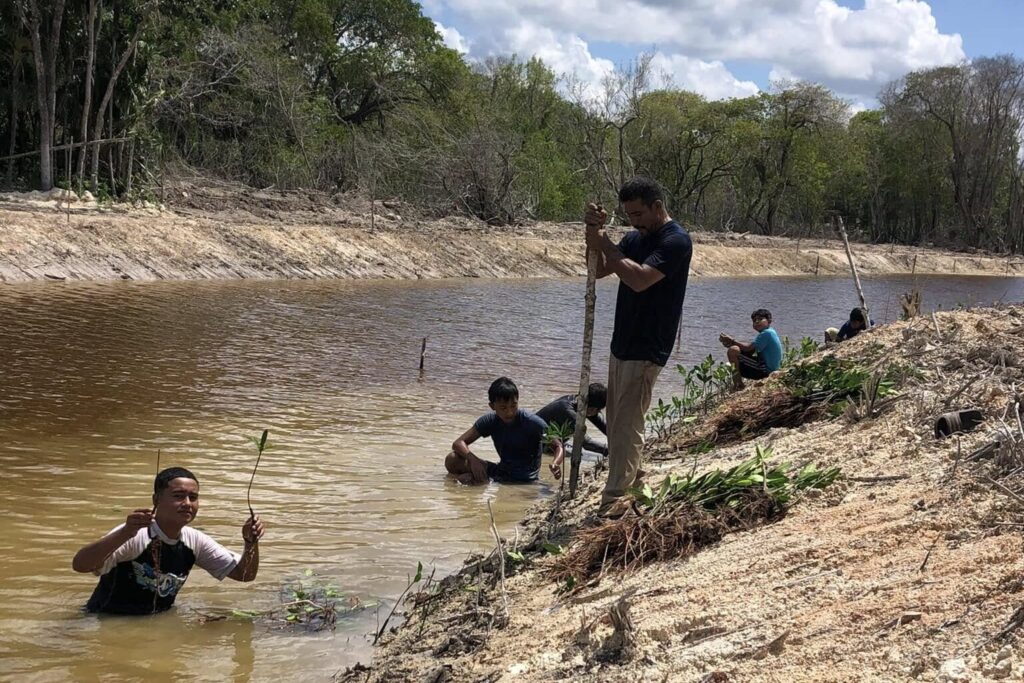
From the beaches of Sarteneja to the mangrove-lined shores of Chunox, a new generation of conservation leaders is rising. What began as a family-led effort has grown into the Three Lagoons Sustainability Program—a movement of young “Eco Guardians” cleaning coastlines, restoring mangroves, and inspiring their peers to protect the environment they call home. Every cleanup tells a story of stewardship: plastic pulled from mangroves, bottles lifted from beaches, seeds planted where erosion once claimed the land. And every action teaches us that safeguarding our environment is not someone else’s job, it’s a responsibility we share as a community and a country. With support from the Belize Fund for a Sustainable Future, the Three Lagoons team is proving how community-based action, powered by sustainable financing for conservation, can build resilience, create pride, and safeguard our coastlines for generations to come. This feature is part of the “Financing for Belize’s Ocean Space” series—stories that show how innovative conservation funding is strengthening Belize’s blue economy and empowering people across the country. #BelizeFund #EcoGuardians #YouthInAction #MarineConservation #SustainableFutures 🎥 Produced in partnership with and by Greater Belize Media/ News 5 Live.

News & Events

Belize Fund at RedLAC Congress 2025: Shaping the Future of Sustainable Ocean Finance

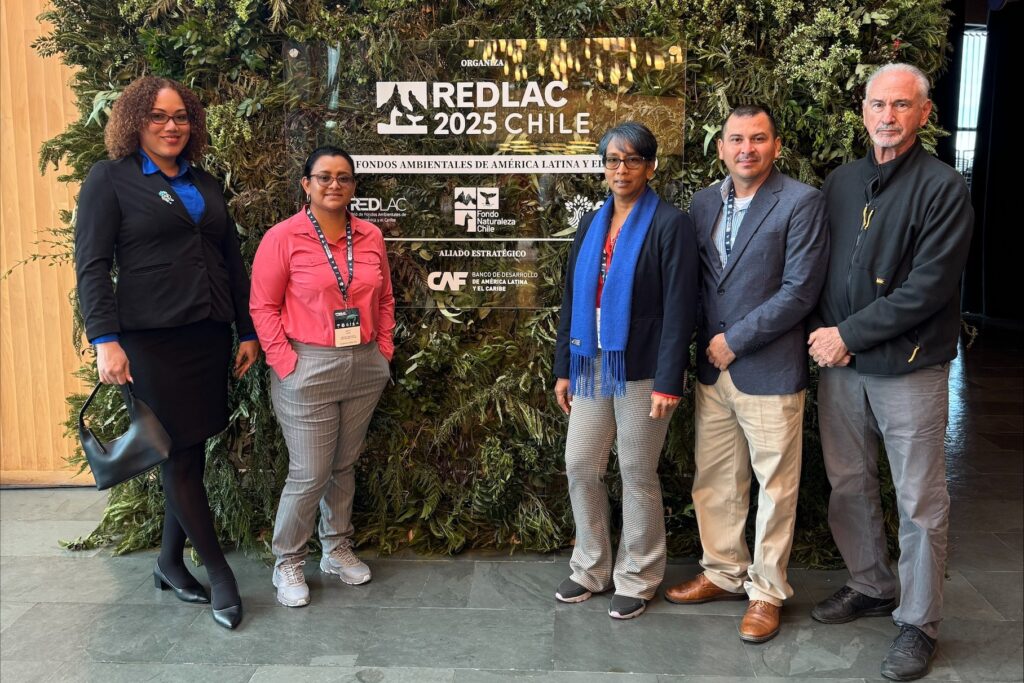
The Belize Fund joined Conservation Trust Funds (CTFs) from across Latin America and the Caribbean at RedLAC Congress 2025, sharing lessons, innovations, and regional priorities for scaling sustainable finance. As a network of environmental funds committed to advancing effective conservation financing, RedLAC continues to play a critical role in shaping how countries safeguard biodiversity while supporting community resilience. Driving Better Impact Reporting for Conservation On September 28, 2025, Program Manager Josué Oliva and Project Officer Patty Pate participated in a workshop on Impact Reporting for Conservation Trust Funds, hosted by The Nature Conservancy. During the session, Josué shared how the Belize Fund is strengthening its systems to measure, track, and communicate results under the Belize Blue Bonds and Debt-for-Nature Swap. He emphasized three pillars guiding our approach: Through continuous learning and partnership, the Belize Fund remains committed to transparent, results-driven reporting that shows how sustainable financing creates meaningful change. Blue Finance for Locally-led Action RedLAC focused on the urgent need for sustainable ocean finance, especially as coastal communities face growing climate risks. With nearly 40% of the world’s population living near vulnerable coasts, our regional CTFs are proving that investing in nature is the smartest choice. Smart Financing for a Sustainable Future On October 2, 2025, our Executive Director, Dr. Leandra Cho-Ricketts, joined the panel “Green Bonds and Blue Bonds: Smart Financing for a Sustainable Future.” Dr. Ricketts reflected on key challenges in ocean conservation and how they guide our work at the Belize Fund—from measuring the real impact of the funding we provide to using targeted communications that amplify results and reach the people who matter most. Belize Fund Joins RedLAC’s Executive Committee A proud milestone for Belize—Dr. Leandra Cho-Ricketts has been elected to the RedLAC Executive Committee, the network’s core working body. In this role, she will work alongside regional leaders to: This achievement reflects Belize’s growing leadership in conservation financing and our commitment to regional collaboration and innovation. Looking Ahead RedLAC Congress 2025 underscored the transformative potential of sustainable financing across the Caribbean and Latin America. By combining scientific evidence, strong monitoring, and effective communications, as well as elevating community-led conservation, we are happy to contribute to regional efforts that champion approaches that uplift people while protecting nature.

News & Events

TASA successfully concludes two-year project, fusing tradition and technology

Managing one of Belize’s most important marine treasures, the Turneffe Atoll Marine Reserve, requires dedication, innovation, collaboration, and sustainable financing. Over the past two years, the Turneffe Atoll Sustainability Association (TASA) has transformed how marine conservation is done in Belize. Blending traditional knowledge with technology, TASA has strengthened enforcement, improved reef monitoring, and deepened engagement with fishers and coastal communities. Through the project, TASA achieved remarkable results: The Belize Fund for a Sustainable Future is proud to have supported this work with a BZD $831,788 grant, helping TASA scale up its digital monitoring tools and advance Belize’s blue economy through stronger, smarter, and more inclusive conservation practices.

News & Events

Changing People, Plastics, and Possibilities for Belize’s Ocean: Inside Sea of Life’s Plastic Solution Academy

A Shift at Wesley College The plastic water pouch crinkles in a student’s hand at Wesley College in Belize City. Just one year ago, these “shilling wata” pouches were everywhere, stacked in bins and across the compound, tossed after every break. Now? They are rare. In 2024, Sea of Life (SoL) piloted Belize City’s first refillable campus, a system that replaces single-use plastics with refill water stations, at Wesley College. Since then, the school cut plastic pouch use by over 85 percent, raised over BZ$10,000 for its own programs, and parents are saving about BZ$300 per year through low-cost, unlimited on-campus water. And the Caribbean Sea, just beyond the campus, is getting a break from thousands of pieces of plastic that used to end up in the water. People First: SoL’s Approach to Conservation Plastic pollution has joined climate change and biodiversity loss as a major environmental crisis of our time. Addressing it can feel bigger than any one community. For countries like Belize, dependent on the ocean, the stakes couldn’t be higher. Yet we continue to import, consume, and struggle to manage the plastic waste that remains. For Executive Director Paulita Bennett-Martin, the solution begins with people: invest in them first, and the ocean benefits for the long run. “We saw a gap,” she explains. “Conservation often counts hectares protected and miles of sea secured, then tells people it will benefit them later. We asked: what if we invest in people now, skills, livelihoods, confidence, and let that transform the environment over time?” With a BZ$150,000 grant over 24 months from the Belize Fund, SoL is scaling its Plastic Solution Academy, a hands-on program where Belizeans learn to turn plastic problems into ocean-friendly products and real businesses. Innovation Through the Plastic Solution Academy Growing Momentum Across the Country This year, 15 Academy graduates from five districts pitched market-ready ideas. Two fellows are now prototyping solutions that could spread across Belize’s coastal businesses and tourism industry. One team, Zero Belize, is developing an alternative thin film to replace single-use plastics, made from sargassum, the invasive seaweed that washes up on our beaches. Another, led by Belizean travel influencer 501 Bae, is designing a resort-quality tote bag line to replace plastics in hotel rooms. It is a Belize-made signature item for eco-tourism, “like a bathrobe: if you love it, you keep it.” “We’re in the research and development phase,” Paulita notes. “We’re connecting fellows with makers already supplying high-end eco-resorts so the products meet that standard.” Bold Targets, Broader Movement, and Multi-Year Funding “This multi-year support is empowering,” Paulita says of Belize Fund’s grant. “It gives stability—to not be in hunt-and-gather mode all the time. We can build, experiment, and think beyond the next quarter. We have breathing room to innovate and give the best impact possible, rather than constantly scrambling for survival.” The targets are bold: eliminate one million single-use plastics per year in Belize by 2028. At the same time, SoL aims to build a wider circle of ocean stewards—entrepreneurs, students, resort teams, and parents—who carry the work forward. “We can’t rely only on NGOs or the professionally trained conservationists,” Paulita emphasizes. For Paulita, conservation lives in classrooms, small businesses, and seaside communities. It’s about building a movement where everyday Belizeans see themselves as ocean stewards. “We need more political capital across the culture,” she says. “Our job is to put tools, training, and confidence into the hands of people who care.” A Growing Community of Ocean Stewards At Wesley College, the change is visible. Three more schools are next. And across Belize, more people are starting to see themselves as part of the solution.


News & Events

What does it really take to protect the ocean, not in theory, but in practice?

For small countries like Belize, where the ocean supports more than half of our economy and livelihoods, the global target of protecting it is a national reality. But it comes with a challenge of will, financing, and partnership. At the 2025 UN Ocean Conference held in Nice, France, global leaders renewed their push for the 30×30 goal: conserving 30% of the ocean by 2030. Alongside it came pledges to reduce plastic pollution, restore degraded ecosystems, and close the ocean finance gap. The commitments were many. But how practical are these goals for small coastal nations like Belize? Belize is emerging as a global leader in marine conservation, protecting 25% of our ocean, banning offshore oil drilling, and leading mangrove and coral restoration efforts. We were also the first Caribbean country to ratify the BBNJ Agreement, the new international treaty for protecting marine biodiversity beyond national jurisdiction. We continue to champion our shared responsibility for the ocean. But sustaining those efforts requires more than ambitions. From Promises into Practice Since 2022, the Belize Fund for a Sustainable Future has served as the financial mechanism under the Belize Blue Bonds agreement, a historic debt-for-nature swap. In just three years, the Belize Fund has invested over BZ$25 million, supporting 14 marine protected areas, more than 200 jobs, and engaging 48 communities. We’ve funded coral restoration, fisheries enforcement, seaweed farming, research, and community education. But our ambition extends further. Guided by our 2025–2030 Priorities, we are focused on: True sustainable development is when conservation supports both the ecosystems and people that depend on healthy reefs. The Challenge Beneath the Surface The global stage is full of powerful language: “The ocean is life.” “No one left behind.” “Mobilize billions.” But for small island developing states (SIDS), the resources are limited. Administrative burdens and heavy. And even well-meaning targets feel out of reach. At UNOC3, multiple countries called for simplified access to ocean finance. For developing countries, the biggest barriers to action aren’t ambitions. They are limited resources, complex systems, and the challenge of turning good plans into funded actions. “The Belize Fund was established to make sure conservation financing reaches the people that need it most through projects, and in ways that are responsive, inclusive and transparent,” says Dr. Leandra Cho-Ricketts, Executive Director of the Belize Fund. “Our grantmaking adapts to local realities while aligning with national and global priorities.” Protecting 30% of the ocean only matters when it supports local communities, respects tradition and culture while promoting sustainable use of marine resources, and creates real opportunities. But it stops working when it’s forced without context or when it makes life harder for the very people who depend on the ocean to survive. Global goals must be grounded in the everyday realities of our people. That’s the work. Partnerships: The Pathway to Progress There is still so much more to do but Belize cannot do it alone. At UNOC3, there were strong calls for increased financing, deeper inclusion of local knowledge, and partnership-building, themes that align deeply with our approach. The Belize Fund exists not just to unlock investment, but also to pilot what’s possible. To bridge the gap between ambition and action. Between the global stage and communities like Chunox, Gales Point, and Barranco. Between targets and transformation. “We are aiming to raise BZ$23.5 million by 2030 to support impactful, science-based and community-led conservation,” says Dr. Cho. Ricketts. “It’s a smart investment with the potential for outsized impact, not just for Belize but for coastal and marine resilience globally.” So, can Belize deliver on 30×30 and more? Absolutely! But we must remember that real progress isn’t only about how much you protect. It’s also about how and who benefits. The ocean is vast. But change can start small. If we want global goals to be more than numbers, we need to fund the frontlines. We need to value the stewardship of small nations with big ocean ambition. And we need to walk the talk because we simply can’t afford not to.

News & Events

Beyond Data: MarAlliance’s Human-Centered Approach to Marine Conservation

When a massive hammerhead shark, nearly as long as their boat, emerged from the crystal waters off Belize’s coast, it wasn’t marine biologists who were leading the tagging operation – it was local fishermen, their hands trembling with excitement as they worked to secure a satellite tag on the magnificent creature. This scene, described by Kirah Forman, Belize National Coordinator of MarAlliance, perfectly captures the organization’s innovative approach to marine conservation. Building a Community-Led Conservation Model Since the late 90s, before the organization was officially established, the dedicated people behind MarAlliance have been leading efforts to safeguard endangered species and critical habitats through marine research, with local fishers at the forefront. Their focus: understanding and protecting marine megafauna – the ocean’s gentle giants like sharks, rays, and sea turtles. Through monthly monitoring expeditions, these fisher-conservationists help gather crucial data that inform marine protection policies. The organization now works with over 30 fisher partners, many of whom have become conservation leaders in their own communities. “These guys have become stewards,” Forman shares proudly. “They’re the ones out there training other fishers, giving presentations, and leading education initiatives. We’ve seen it handed down from father to son.” Success Stories: From Fishing Nets to Conservation Leadership In one inspiring case, a seasoned fisherman joined the program and introduced his son, who has since become a core team member. Supported by MarAlliance, the young fisher is pursuing further education while continuing his conservation work. He also recruited a friend, extending the ripple effect of conservation education within his own community. Another fisher was recently elected to the executive board of a local fishing cooperative. “Watching these guys go from fishers to leaders within their communities is one of our greatest achievements,” says Kirah. “It’s an incredibly proud moment for us to see them grow.” As these fishers continue to step into leadership roles within their communities, they’re also ensuring that conservation efforts will have a lasting impact. Measuring Success: A Decade of Data At sites like Lighthouse Reef Atoll, where over a decade of consistent monitoring using multiple methods including baited remote underwater video (BRUV) has yielded invaluable insights, the impact is clear. “We’re seeing increasing shark numbers, not just in quantity but in species diversity,” Kirah notes. “We’re excited to observe lemon sharks returning to areas where they haven’t been seen in years.” These long-term datasets are proving instrumental in validating conservation policies. “Because we have been consistent in our work and methods used, we can now tell the government that their policies are working,” Kirah explains. “The two-mile protection radius around the atolls, the ban on gillnets – our data shows these measures are effectively increasing biodiversity and protecting these marine species.” Facing New Challenges: Climate Change and Disappearing Species As climate change adds new challenges to marine conservation efforts, the value of long-term monitoring becomes even more apparent. Temperature changes and their impacts on marine life can only be understood through consistent observation over time. The disappearance of whale sharks from their usual feeding grounds around Gladden Spit Marine Reserve serves as a stark warning. These gentle filter-feeders captivate divers, snorkelers, and conservationists, reaching lengths of up to 60 feet, and were once the cornerstone of a thriving ecotourism industry. “We know whale sharks aren’t there in Gladden Spit anymore, which was a huge tourism income generator for local communities,” reflects Kirah. “But the bigger question is: why? And what does their disappearance tell us about the health of our ocean?” Sustainable Funding: The Key to Long-Term Success Through a crucial BZ$652,342 grant from the Belize Fund for a Sustainable Future (Belize Fund), MarAlliance continues its vital research. “Monitoring is expensive,” explains Kirah. “We have to pay our fisher partners, support our team, fuel our boats – so investment such as these are important to help us continue our work to understand crucial trends in marine biodiversity, we simply couldn’t do this work without funding.” Yet the challenges of securing long-term funding persist. “It’s a marathon, not a sprint,” Kirah emphasizes. “With species that live in the slow lane – those that don’t reproduce or grow quickly – you often need more than ten years to understand trends. But many donors want quick results.” Looking Ahead: A Vision for Ocean Rewilding MarAlliance’s vision extends beyond data collection to practical application. “If this research isn’t informing policy, then it wouldn’t make sense,” Kirah emphasizes. “Our mission is rewilding the ocean. We want to see more sharks, more fish, more turtles, more biodiversity.” As this work continues – monitoring, understanding, and protecting the marine ecosystems that sustain both wildlife and communities, one question remains: will we commit to supporting marine conservation needed to ensure the survival of these species before it’s too late? The future of Belize’s marine treasures – and the communities that rely on them – depend on the answer.

Scroll to Top